Chainalysis Data Highlights Divergent Market Share for Domestic Crypto Exchanges in India and Brazil
New data from Chainalysis reveals that domestic crypto exchanges in India capture only 0.7% of exchange value, while Brazil-based platforms have grown their share to 12.5%.

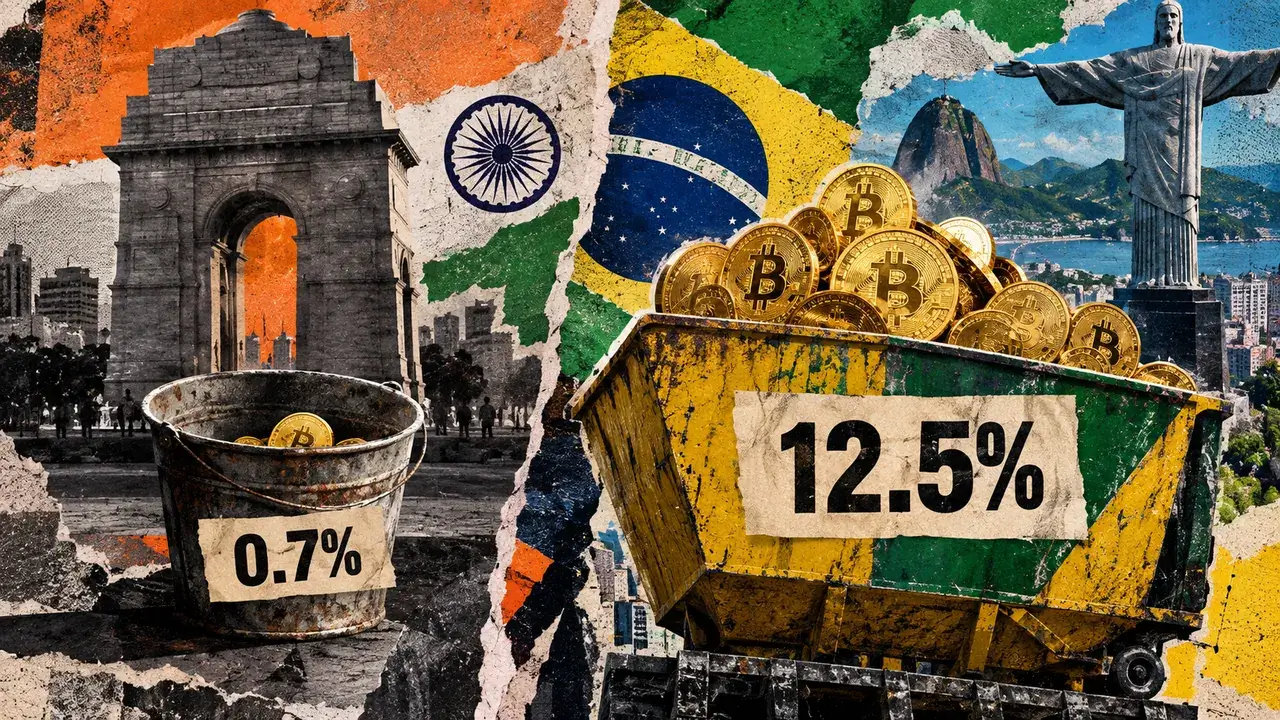
Chainalysis recently released regional reports detailing the landscape of centralized exchange activity in India and Brazil. The findings highlight a significant gap between the total crypto activity attributed to a country and the portion of that volume captured by local platforms.
In India, domestic exchanges now receive just 0.7% of exchange value, a sharp decline from previous levels of around 7%. Despite this small domestic foothold, India remains the largest market in Central and Southeast Asia and Oceania, with Chainalysis attributing $88.4 billion in centralized-exchange inflows to India-based users during the annual period ending in June.
The situation in Brazil shows a different trend. Brazil-based exchanges have seen their share of inflows rise to 12.5%, up from a previous level of 1.5%. The broader crypto economy in Brazil recorded $252.5 billion in activity during the same annual period.
The reports note that India’s 1% withholding tax on virtual digital asset transfers may influence venue choice. Ashish Singhal, co-founder of CoinSwitch, suggested to Chainalysis that tax friction contributes to the use of offshore platforms, noting that foreign venues may not always apply the same deductions. However, the exact impact of this tax policy on market share remains unmeasured.
Chainalysis points to regulatory clarity, investment, and improved local offerings as potential factors behind the growth of Brazil’s domestic exchange share. Additionally, industry participants in Brazil have highlighted the use of corporate stablecoins for liquidity and cross-border transfers as a driver of demand.
The data relies on estimates of geographically attributed activity, with Chainalysis using website traffic and adjustments for income differences to assign service activity to specific countries. The firm acknowledges that these figures are estimates and that challenges such as VPN and bot traffic introduce inherent uncertainty into the comparisons.