Chainlink Introduces CCIP 2.0 With New Cross-Chain Verifier Options
Chainlink has launched CCIP 2.0, allowing token issuers to mandate additional verifier approvals for cross-chain transfers, which may impact how and when tokens are released on destination networks.

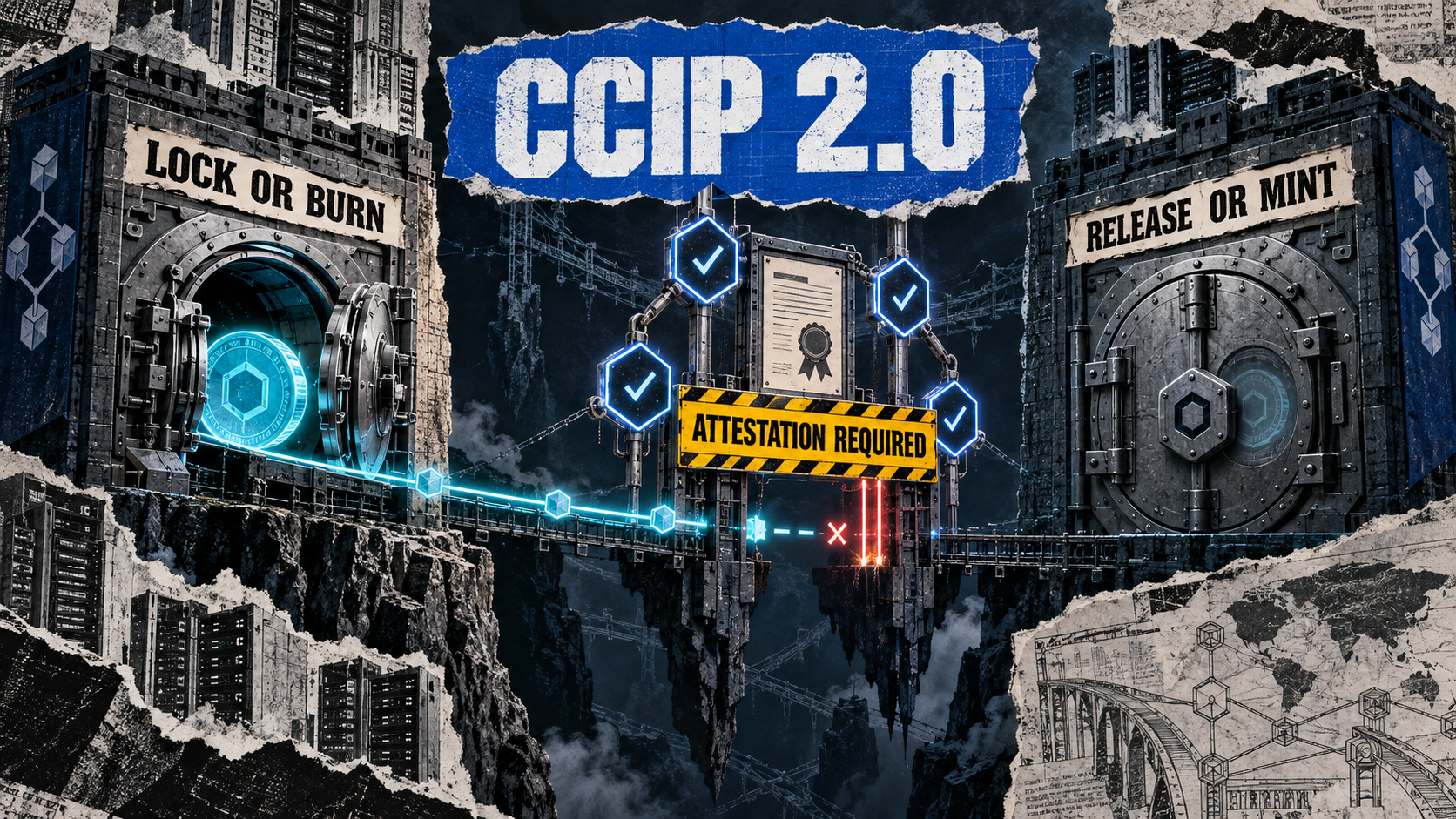
Chainlink announced CCIP 2.0 on Sept. 28, introducing optional Cross-Chain Verifiers (CCVs) that operate alongside the existing Committee Verifier. This update allows token issuers or third parties to require specific attestations before tokens are released or minted on a destination blockchain.
Under this model, a sending pool may lock or burn tokens before the verification process is complete. If a required verifier fails to provide the necessary attestation, the destination chain cannot finalize the transfer. Chainlink notes that an unresponsive verifier can stall any message requiring its approval.
The default Committee Verifier consists of 16 independent node operators. When issuers add their own CCVs, they take on responsibility for the implementation, maintenance, and uptime of those services. Chainlink specifies that the design permits this control, though it does not provide evidence that any specific issuer has used the feature to block user transfers.
For users, the destination execution remains permissionless only once all required proofs are submitted. While manual execution is possible, it cannot bypass missing verifier attestations. Chainlink does not provide a general automatic refund or cancellation mechanism if a required verifier fails to attest, meaning any recovery process would depend on the specific arrangements set by the token issuer.
Chainlink also introduced a faster-than-finality transfer option, though this does not waive the requirement for necessary attestations. The company notes that this faster option could expose transfers to duplicate execution in the event of a deep blockchain reorganization.
Chainlink is currently ranked #12 by market cap. The asset is up 10.98% over the past 24 hours, with a market cap of $11.37B and a 24-hour trading volume of $1.41B.