Rising Manufacturing Input Costs Put Focus on Fed Rate Outlook
A jump in the ISM manufacturing prices index has sparked concerns over potential interest rate hikes, creating a complex backdrop for Bitcoin as traders await the upcoming US jobs report.

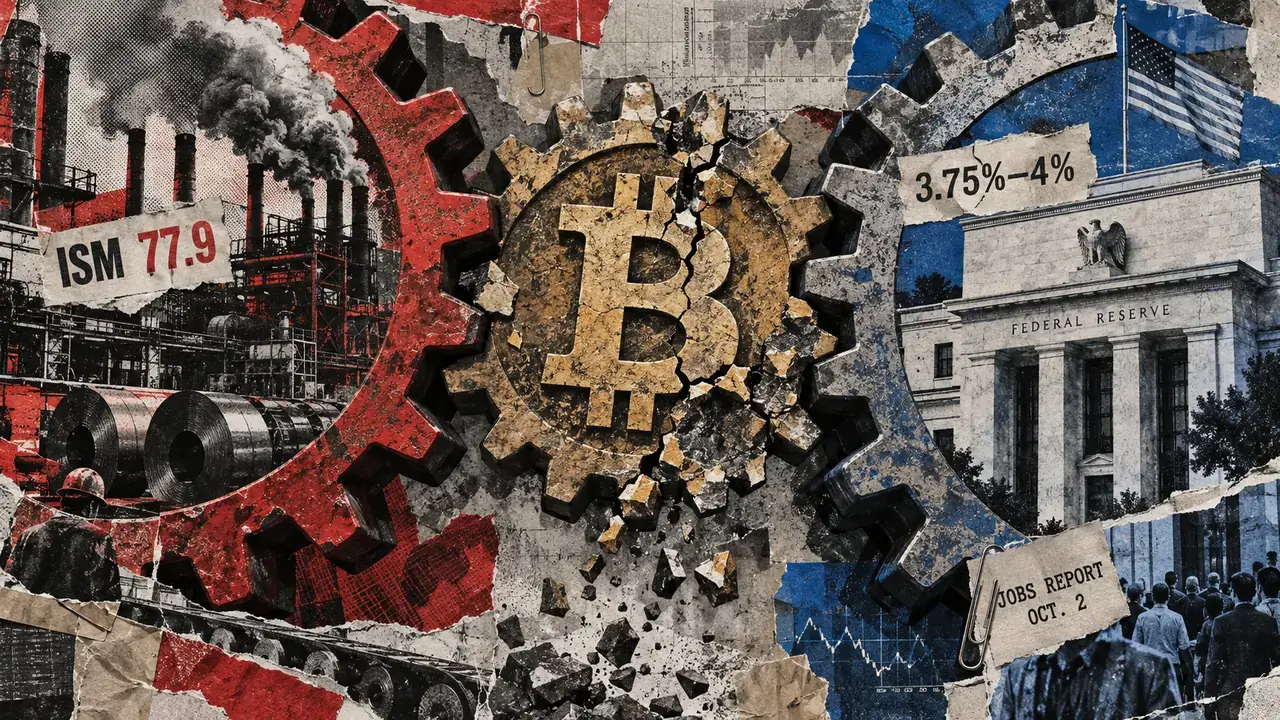
US manufacturing input prices saw a broad increase in September, according to data from the Institute for Supply Management. The manufacturing prices index climbed to 77.9, a 6.8-point rise from the 71.1 recorded in August. While the index measures the breadth of reported price increases rather than a specific inflation rate, 58.6% of respondents reported higher input costs, up from 46.2% the previous month.
The manufacturing PMI registered 54.5, with new orders at 55.3 and employment at 52.7. This data arrives as the market weighs the possibility of further interest rate adjustments. On Sept. 16, the Federal Open Market Committee raised its target range to 3.75% to 4%. New York Fed President John Williams noted on Sept. 29 that another rate increase could be appropriate later this year if the economy aligns with his forecasts, though he added there is currently no evidence that these price shocks are leading to persistent inflation.
For Bitcoin, the potential for higher interest rates creates a dual challenge. Increased borrowing costs may dampen financed risk-taking, while higher yields on dollar-denominated assets could raise the return threshold investors require to hold BTC. The market is now looking toward the Bureau of Labor Statistics' employment report scheduled for Oct. 2 to provide further clarity on the economic outlook.
While the ISM manufacturing employment reading provides some insight, it does not serve as a substitute for the national payroll data. The ultimate impact on Bitcoin depends on how investors interpret the combined economic signals. If the jobs report fuels expectations for higher rates, it could present a firmer obstacle for the asset, whereas a decline in front-end Treasury yields or expected policy rates could alleviate that pressure.
A February 2023 study by New York Fed staff found no systematic response from Bitcoin to macroeconomic news in its historical intraday sample. As a result, the market remains focused on whether rate expectations shift and if Bitcoin reacts accordingly, rather than assuming that rising factory costs will trigger an immediate selloff.