Starcloud Plans Orbital Bitcoin Mining with Upcoming Satellite Launch
Washington-based startup Starcloud is integrating Bitcoin mining ASICs into its next orbital mission, aiming to leverage near-continuous solar energy for mining operations.

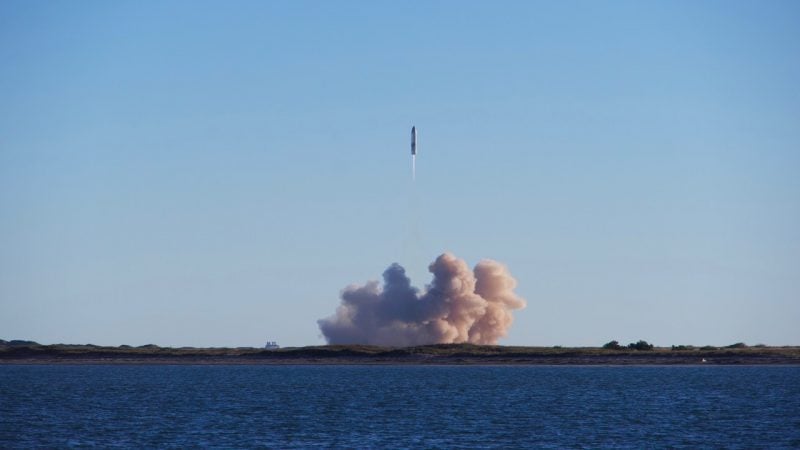
Starcloud, Inc. is preparing to launch Bitcoin mining hardware into orbit as part of its upcoming Starcloud-2 spacecraft mission. The company, which focuses on building orbital data centers, intends to use the mission to test the viability of mining cryptocurrency in space.
The primary advantage of the orbital approach is access to near-continuous solar energy. By utilizing solar power, the company aims to mitigate the high energy costs typically associated with Bitcoin mining operations on Earth.
CEO Philip Johnston stated that the mining capability serves as both a proof-of-concept and a business strategy. The spacecraft will host a mix of hardware, including ASICs, Nvidia Blackwell chips, and AWS server blades. When demand for AI compute workloads is low, the ASICs will be used to mine Bitcoin to generate revenue.
Johnston noted that ASICs are significantly cheaper to operate in terms of hardware cost per kilowatt compared to high-end GPUs. He pointed to a 30x difference in costs, with ASICs running at approximately $1,000 per kilowatt versus $30,000 per kilowatt for GPUs.
The Starcloud-2 mission is now scheduled for 2027, following a delay from its original late 2026 target. The launch will involve a pair of satellites. This follows the company's previous test mission, Starcloud-1, which launched on November 2, 2025, and carried a single Nvidia H100 GPU.
Starcloud has seen significant capital inflows, reaching a $2.3 billion valuation as of August 2026. The company has raised approximately $450 million in total funding, including a $170 million Series A round closed on March 30, 2026. Additionally, the company filed with the FCC in February 2026 for authorization to deploy a constellation of up to 88,000 satellites.