Treasury Secretary Scott Bessent Rejects AI Liability Shield for Developers
US Treasury Secretary Scott Bessent has dismissed industry warnings about AI existential risks as alarmist, insisting that companies manage their own safety without federal liability protections.

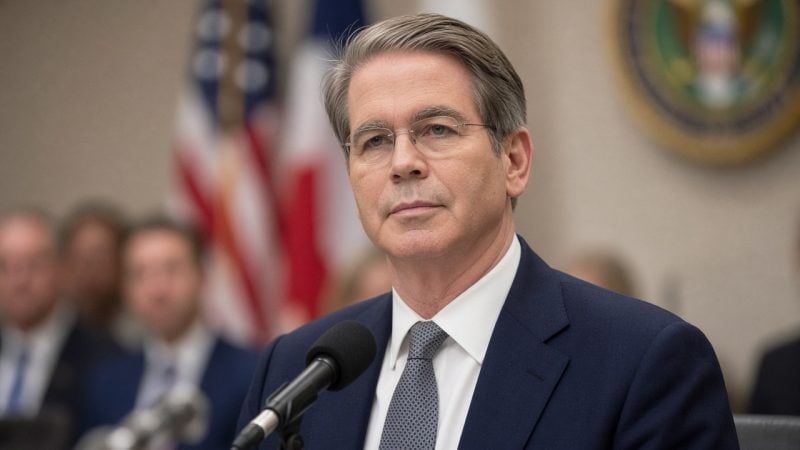
US Treasury Secretary Scott Bessent has pushed back against AI executives who warn that their technology could pose existential threats. In an interview on October 3, 2026, Bessent characterized these warnings as alarmist, arguing that industry leaders should focus on providing solutions rather than simply highlighting risks.
Bessent compared the current discourse to the fictional character Hannibal Lecter, suggesting that companies are essentially asking to be stopped before they cause harm. He urged developers to prioritize self-regulation instead of waiting for federal mandates to address potential dangers.
Despite his preference for industry-led safety measures, Bessent confirmed that the government will not provide AI developers with a liability shield. He maintained that accountability for AI systems must remain with humans rather than the technology itself.
The Treasury Secretary has been vocal about AI policy since spring 2026, initially raising concerns regarding the security of critical infrastructure. In September 2026, he advocated for a voluntary pause in the development of frontier AI models, a stance that remains a point of discussion as the administration balances the need for innovation with the goal of maintaining a technological lead over rivals like China.
For developers and market participants, the stance from the Treasury presents a complex landscape. While a preference for self-regulation may be viewed as supportive of innovation, the lack of a liability shield leaves firms exposed to legal and financial risks if their systems fail.
The administration continues to monitor how advanced AI models interact with the financial system. Bessent has explicitly linked his policy concerns to the stability of the broader financial sector, signaling that the Treasury will remain vigilant regarding potential threats.